




A Conversation with Captain Gary Lachman of Blue Devil Fishing Team – west palm beach, fl
- You clear the inlet and you’re headed out. What are you looking for in those first few minutes?
I’m looking for natural clues as to where the fish are most likely to be found. We look up to the sky for circling birds, especially Frigates and other tuna birds. They are usually feeding on schools of bait like ballyhoo, pilchards, sardines, and goggle eyes.
On the surface of the water we search for rip currents, slicks, and edges because these anomalies often reveal where the baitfish are, and where there are baitfish, there often are hungry tuna, sailfish, mahi-mahi, wahoo, and other gamefish. Below the surface, we keep an eye on our sonar for bottom structure that may hold fish as well as the red eyebrow shapes that indicate larger pelagics.
- What’s the catch that defines your time on the water — the one you still talk about?
Most recently, we were about 20 miles offshore hunting for swordfish. Our baits were down between 1,400 feet and 1,600 feet. One was straight down and the other about 75 yards behind the boat attached to a buoy with a white indicator pole and flag. When the tip of one of our rods began bouncing up and down, we knew we had a fish on. Twenty minutes later we had a nice 125 lb. sword trussed up on the deck.

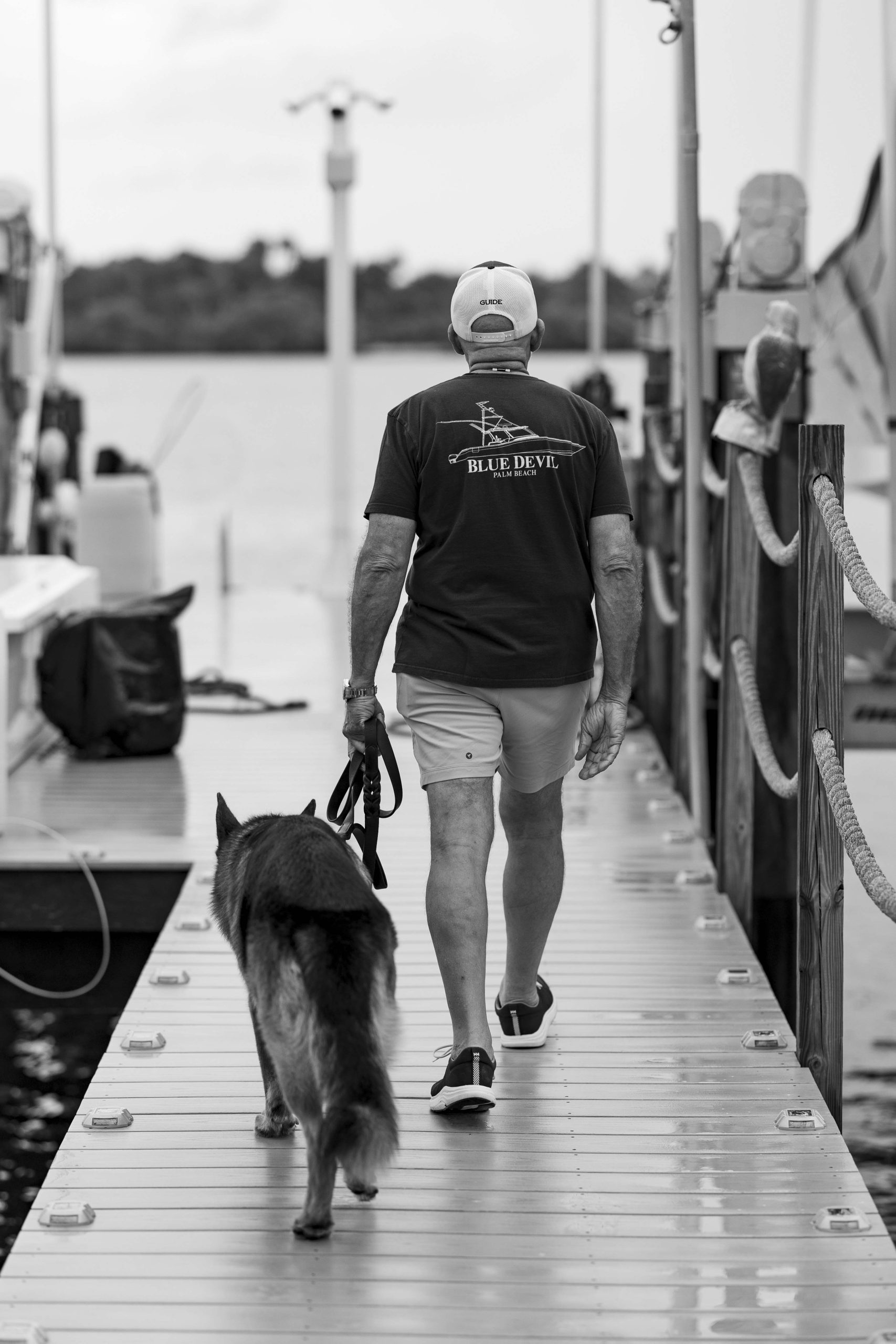
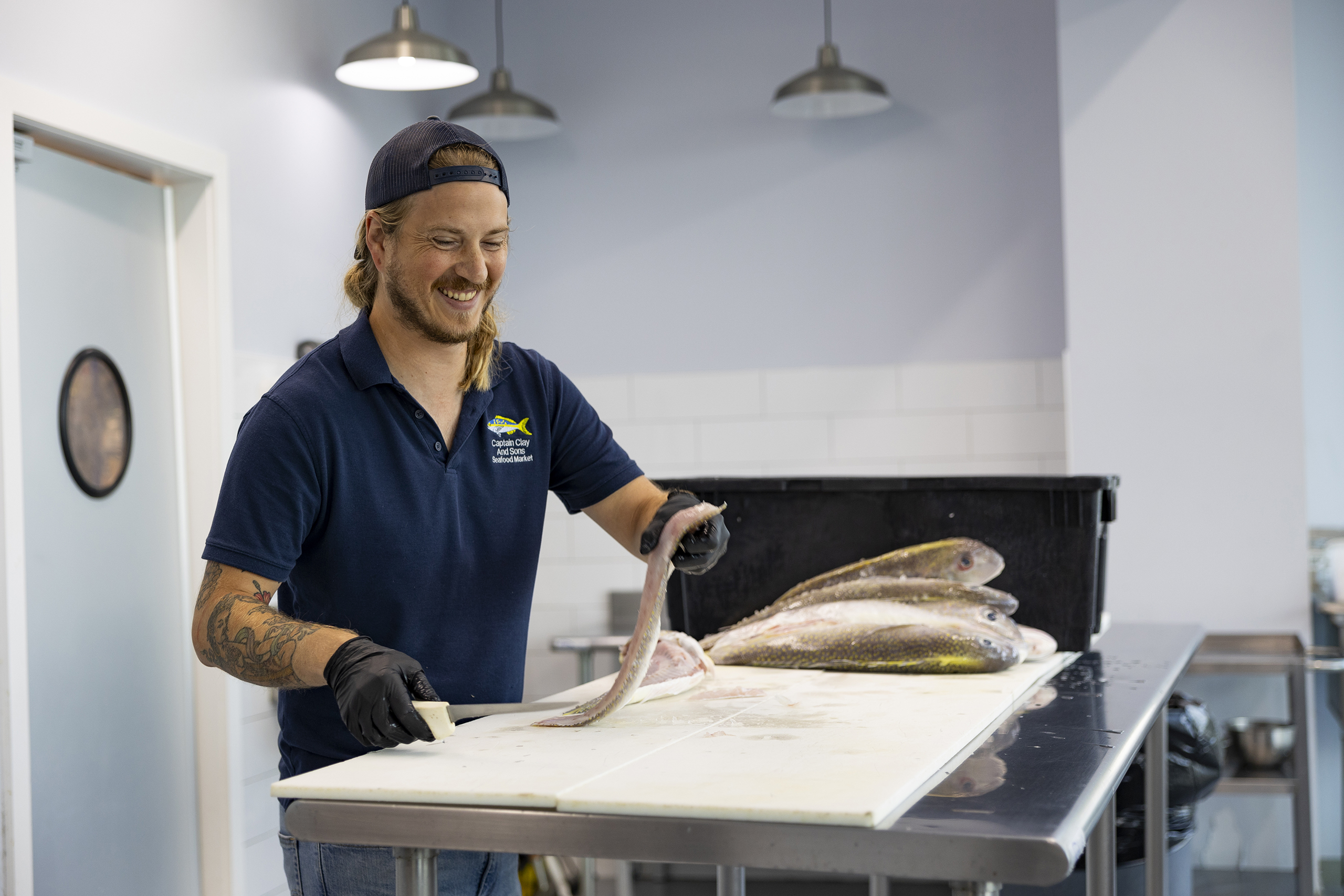
After nearly eight hours at sea, we were all set to return home when the buoy pole flattened against the water, indicating a good bite. We slowly began retrieving the line with the LP electric reel. Seven and a half hours later, we had a 425 lb. swordfish on the deck. This had been a 17.5 hour trip endured not only by Matt and Steve Magassy, but also Bones, my German Shepherd service dog. Back home, when co-captain Steve Magassy began his “filet surgery,” we saw that the big one was a pumpkin swordfish; the most delicious meat found deep under the sea. Between those two fish, we must have fed 20 people.
But that wasn’t our only memorable trip that is forever embedded in Blue Devil Fishing Team history. A couple of years ago we had the pleasure of taking out a small group from Captains For Clean Water. First we found a school of large mutton snapper, and then a couple of athletic sailfish were hooked up from our kite baits. We then decided to head far offshore to look for swordfish. We weren’t disappointed. Two 150+ lb. swordfish took the expertly-tied baits prepared by the Magassy twins and were landed aboard the Blue Devil. This was all filmed by Noah Miller and compiled into a promotional video for Captains For Clean Water.
- The alarm goes off and it’s tournament day. What does that morning look like before you ever hit the water?
First of all, it’s dark. It’s only 4:30 in the morning. We are scooping live bait out of our dock’s bait tanks into the bait wells aboard the Blue Devil. Rods are being loaded into the rocket launchers, food is being prepared by my very supportive wife Linda, and onboard refrigerators checked for ample water and soft drinks. If it’s a windless day, balloons are filled with helium and lashed down for use with the kites. Five or six different opinions on tournament strategy are being argued. The generator is switched on and the shore power is disconnected. The radio is checked and the navigation lights are turned on. And off we go with high hopes, confidence, and expectations as we race into the sunrise.
- How much of what happens on tournament day has nothing to do with fish?
It’s all about the fish – Where they might be found, what bait to rig, and how to deploy it; kite or flatline or both. That being said, the music and food are critical for having fun. And after all, isn’t that what’s it all about? The camaraderie, teamwork, and respect for the natural world.
- What’s the moment a first-timer has on your boat that tells you they’re hooked for life?
When we hand a rod with an acrobatic sailfish or mahi-mahi tearing line off the reel, jumping and performing flips like a marine life Cirque du Soleil. Their eyes light up, the smiles are usually blinding.
- You donate your tournament winnings to Captains For Clean Water. What are you seeing out there that makes that feel necessary?
When we are navigating through the Intracoastal Waterway and see dirty brown water we know that will soon flow into the ocean. When we are looking for beds of seagrass that feed manatees and hold baitfish that have disappeared due to toxic chemicals like nitrates and phosphates from sugar cane farming. When our newly-washed boat is covered in ash from the burning of cane fields to the west. When we see evidence of blue-green algal blooms in the St. Lucie River or dead fish on the beach from red tide. When divers tell us the reefs are dying. All such conditions make it obvious that the fight for clean water is essential to the health of Florida’s marine life, its citizens and visitors, our property values, and our economy.
“After all, isn’t that what’s it all
about? The camaraderie, teamwork, and respect for the
natural world.”
- If someone handed you a boat and told you to disappear for a week, where would you go?
Assuming it’s a large and very fast boat, I’d be headed east to Madeira to catch a few grander (1000+ lb.) blue marlin. In the summer, it’s up the coast of British Columbia all the way to Alaska, stopping to catch some Chinook Salmon, lingcod, and halibut.