




How Water Flow Affects All Floridians
By Haley Dockendorff
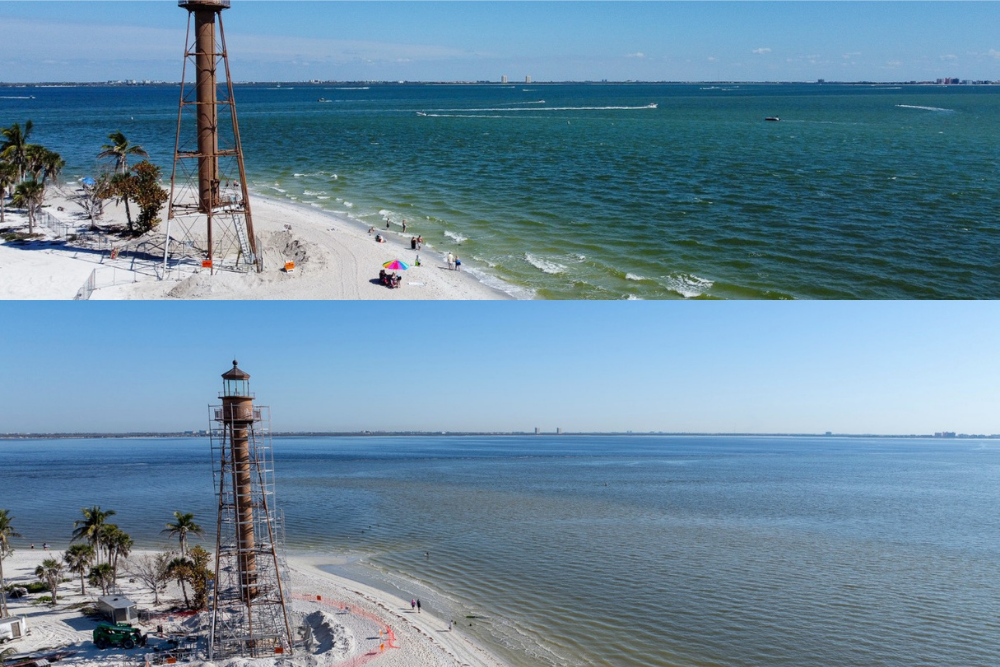
In 2016, more than 200 billion gallons of water from Lake Okeechobee were released into the St. Lucie canal leading to The Atlantic Ocean. What followed resulted in the death of hundreds of fish and the destruction of entire beds of river grass habitats. Toxic algae blooms plagued the St. Lucie and Indian Rivers, and coffee-colored, contaminated water spread as far as Hobe Sound and Juno Beach.

Photo: Ed Lippisch.
During the height of fishing season, Florida’s West Coast had it even worse. For each discharge sent to the St. Lucie River, an equal or greater amount is sent to the Caloosahatchee River, leading to the Gulf. Toxic algae spread like wildfire through the wetlands and shorelines, making most water-based activities impossible due to the air’s extreme toxicity and neurological side effects.
For Captains Chris Wittman and Daniel Andrews of Fort Myers, these discharges to the West Coast were nothing new. But that year, something was different.
“This was the first time in our professional careers that it was crippling our business,” Chris said. “It was the wake-up call that if something didn’t change, the flats we fished our whole lives would not exist in the near future.”
From there, Daniel and Chris had decided they “had enough” of the way Florida’s water was being managed. Together, they co-founded a grassroots nonprofit based in Fort Myers dedicated to restoring and protecting our water resources, which became known as Captains For Clean Water (CFCW).

Their intentions were never to start a full-fledged organization, but even after 10 years, the fight for clean water is far from over. As they realized the sheer size of the roadblocks they would face, their organization grew to include lawyers, outreach specialists, expert fishing guides, and even content creators.
Their organization is run by Floridians across the state who share the same passion and drive to keep our water clean. Captain Mike Holliday of Stuart is just one of those team members, working from Jupiter to Vero Beach as an outreach and engagement coordinator and taking people on the water as a guide to educate them about the state of the rivers and waterways.
His choice to join CFCW felt like the natural thing to do. “You see the things you love being destroyed in front of you, and you either leave, or you fight,” Mike said. “It got to a point where it became time to fight.”
Mike first got his captain’s license in 1986 after a serendipitous run-in with the then-New York Mets manager, who couldn’t find a fishing guide, and agreed to fish with Mike instead. The whole experience inspired Mike to become a part-time fishing guide, in addition to his lifelong career as a fishing writer and outdoor author.

Mike said the discharges have been an issue for as long as he can remember. After moving to the Jensen Beach area in 1978, the problem only got worse. With prolonged discharges, the freshwater volume coming from Lake Okeechobee is pushed back up the Indian River, diluting the water and killing the seagrass beds that thrive in saltwater.
Mike used to fish both the St. Lucie and the Indian Rivers, but now he’s forced to fish almost exclusively the Indian River or opt for off-shore fishing. This is because of the layers of what he calls “muck” that have settled in the St. Lucie River.
The polluted, untreated water from Lake Okeechobee that is discharged to both the East and West coast of Florida carries sediment that then settles in the estuaries, leaving behind feet of “muck” that seagrass cannot root in. Boats propellors stir up the sediment, leaving the water a consistent, murky brown. Between the minimal habitat and little to no visibility, fishing the St. Lucie River just isn’t worth it anymore, Mike told us.
These are the long-term consequences of how water flow has been managed in the state. Historically, the water from Lake Okeechobee naturally flowed south and was filtered through the “river of grass” as it moved through the Everglades and into the aquifers.
That all changed in 1928 after a hurricane raised the levels of Lake Okeechobee, creating a deadly flood that killed more than 2,500 people living south of the lake and devastated the farming community. To prevent future catastrophes and floods, The Army Corps of Engineers began construction of the Herbert Hoover Dike, halting the natural flow of water south. Now, these harmful discharges are the only way to lower the levels of the lake when they become dangerously high — for now.
The Comprehensive Everglades Restoration Plan, or CERP, is a $10.5 billion, 35-year restoration program designed to be rolled out in several projects. It is a 50/50 partnership between the U.S. Army Corps of Engineers and the South Florida Water Management District. Since Congress enacted it in 2000, only a handful of its restoration projects have begun construction, and even fewer have been completed. One of those projects, the EAA Reservoir, will provide a way to hold and filter the contaminated overflow of the lake before sending it south, but it has faced a multitude of threats and lawsuits since the project broke ground.
Chris says these projects are a main reason why CFCW exists. “We want to see Everglades restoration infrastructure projects completed. Once they’re completed, we need to continue to advocate and fight to make sure they’re operated to their maximum benefit,” he said. “We can build multibillion-dollar reservoirs, but if we don’t operate them to their full capacity, we’ll still continue to see these negative impacts.”
Those negative impacts affect more than inland waterways and fisheries. Captain Gary Lachman, owner of Blue Devil Fishing Team based out of West Palm Beach, is a CFCW board member. He first got involved when he could no longer ignore the decline of areas he had fished for decades. Gary told us a big reason why he decided to join CFCW was because the group was “fishermen speaking up for the water, not politicians chasing headlines.”
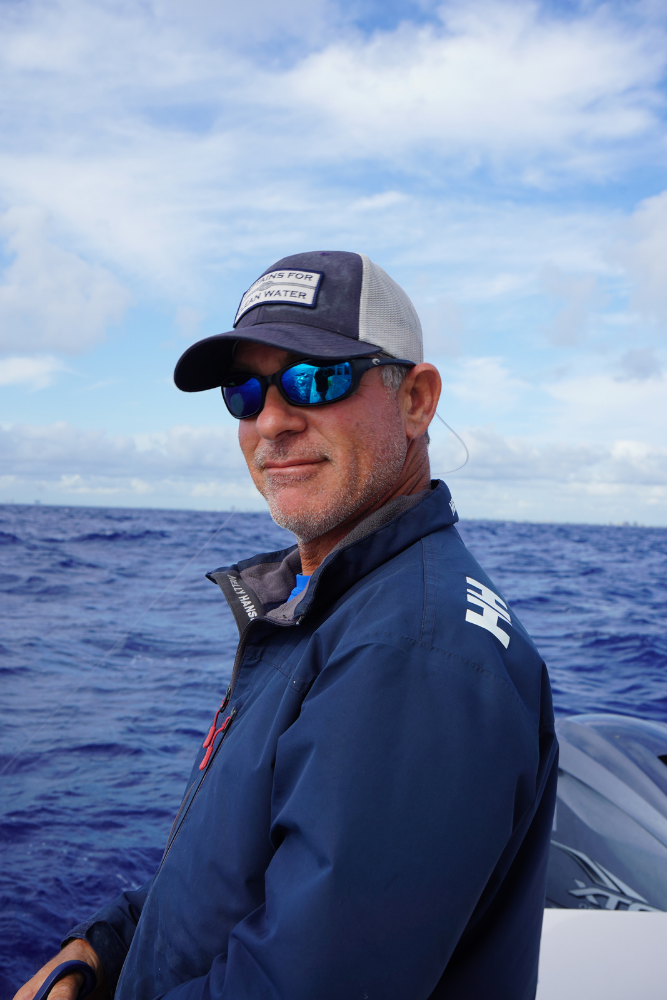
Blue Devil Fishing Team’s other two founding members, Captain Steve Magassy (pictured) and Matt Magassy, are also passionately involved with the fight for clean water. Just like Mike, Steve and Matt remember days when the fishing was more consistent, and the water quality was “noticeably better.”
“This isn’t just about fishermen. Clean water affects tourism, public health, real estate, and Florida’s economy,” Steve said. “If you live here, this fight impacts you – whether you fish or not.”
Along with their advocacy and education efforts, Blue Devil Fishing Team donates their tournament winnings to CFCW to support
their mission.
“This industry exists because of the resource,” Matt said. “Reinvesting in its protection just feels like good stewardship.”
Captains For Clean Water may have started as just that — but this fight is not for fishermen alone. As water people, this is about our way of life, and it faces a constant barrage of threats from larger interests and corporations. The issues are complex and drawn out, which is why educating yourself about the fight for clean water is so important.
The best way to support CFCW’s mission is by becoming a member, but educating yourself and using your voice is even more important, especially now.
“People using their voices to let policymakers know how these issues impact them in an authentic way is extremely powerful,” Chris said. “It’s much more powerful than the lobbyists walking through the halls of Tallahassee and Washington, D.C.”
You can visit captainsforcleanwater.org to read more about their mission and sign up for their newsletter to better understand the current issues pressing Everglades restoration.