



Beneath the Surface with Rosie Moore
By Ava Bourbeau
She does what she wants — and she looks good doing it — but water people know real value is found below the surface.
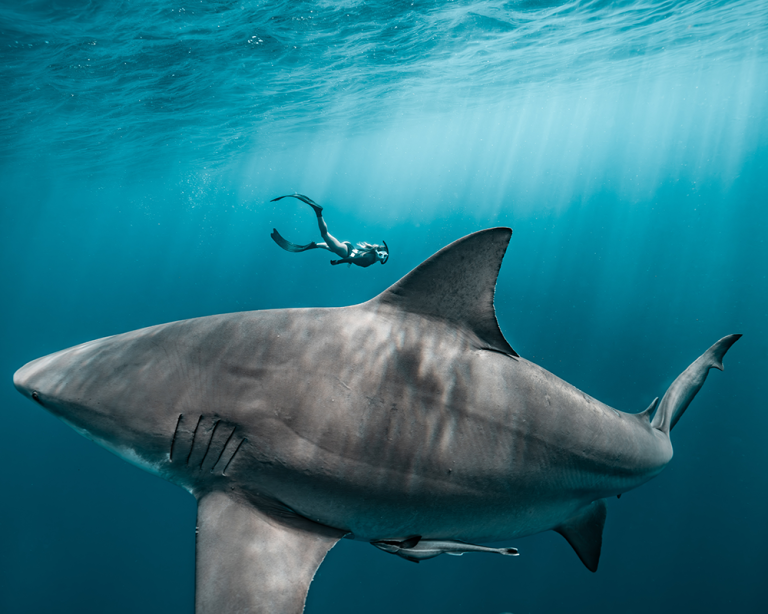
Maybe you recognize her from her time tracking shark species around the globe for Shark Week. Maybe you’ve seen her peacefully swimming with alligators during your daily doom scroll. Either way, you’ll have noticed Rosie Moore has an unmistakable presence that looks right at home in the water.
You’d even be forgiven for assuming that she was born and raised by the water. Really, she grew up in a small, landlocked Missouri town — only visiting Florida in the summers, but being so drawn to the water that she became SCUBA certified by the age of 10.
Rosie is a biologist, wildlife expert, master diver, and content creator with her Master of Science degree from Florida Atlantic University.
She’s known for her educational and conservation work with apex predators across habitats worldwide. On top of her scientific ambitions, she occasionally models, posing for photos deep in the Everglades or smiling with sharks.
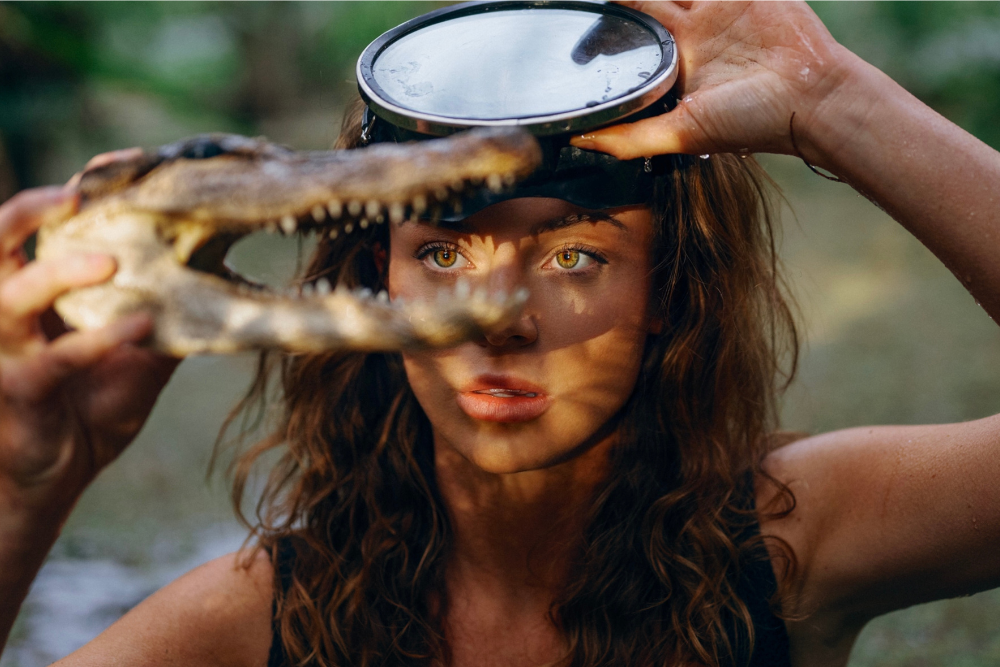
Rosie is a vocal, ardent challenger of stereotypical perceptions of what a scientist can look like.
“I’ve always been a bit of a science nerd,” she added. “Even as a kid, I was asking for science equipment for my birthday.”
Her first wildlife job — working with baby wood storks in the Everglades — set everything in motion. It feels fitting that birds catalyzed Rosie’s career in a way — historically, birds have been catalysts of conservation and positive change in the Everglades and beyond.
What the Everglades lack in postcard drama, it makes up for in life. It’s an extremely biologically valuable habitat and is home to multiple endemic species. It’s also the only place in the world where alligators and crocodiles co-exist. The value is easy to miss if you’re looking for spectacle over substance.
“Most people do not realize how clean and clear the water actually is. I always joke that you could probably drink it if you had to. And despite its dangerous reputation, being out there does not feel dangerous or intimidating. It feels peaceful, quiet, and incredibly alive,” Rosie said.

Perhaps it was this fearlessness that inspired Rosie to dedicate her career to studying apex predators in aquatic habitats, whether she’s catching pythons in the Everglades or tagging hammerhead sharks in Costa Rica. She, like the Florida crocodile, thrives in both fresh and salt water.
Rosie’s work surrounds two main models: Scientist-Led Expeditions (SLEs) and citizen science.
“Each expedition reminds me why I love this work so much. Being in the water, collecting data, and helping protect the ocean never stops feeling magical,” Rosie said.
Rosie’s work doesn’t just live here in South Florida. Citizen science initiatives take her research all over the globe, from collecting water samples that help track great white sharks in the Mediterranean to allowing anglers to collect fin clips from bluefin tuna to help researchers at the University of Maine.
The project that stole her heart, however, was working with the SeaKeepers Society Marine Megafauna Foundation on their manta ray research right in Boynton Beach.
This unique foundation is dedicated specifically to protecting marine giants—apex and gentle alike. This project is the first of
its kind in Florida, focusing specifically on manta rays.
The Foundation’s work studying the biology and ecology of manta rays in the area revealed there is a rare manta ray nursery habitat between Jupiter and Boynton inlets and, further, that many cases of anglers harming the animals occurred because they were unaware of their presence.
This site is one of only three known in the world.
“Most boaters have no idea it’s there,” Rosie said. “That’s why this work is so important.”
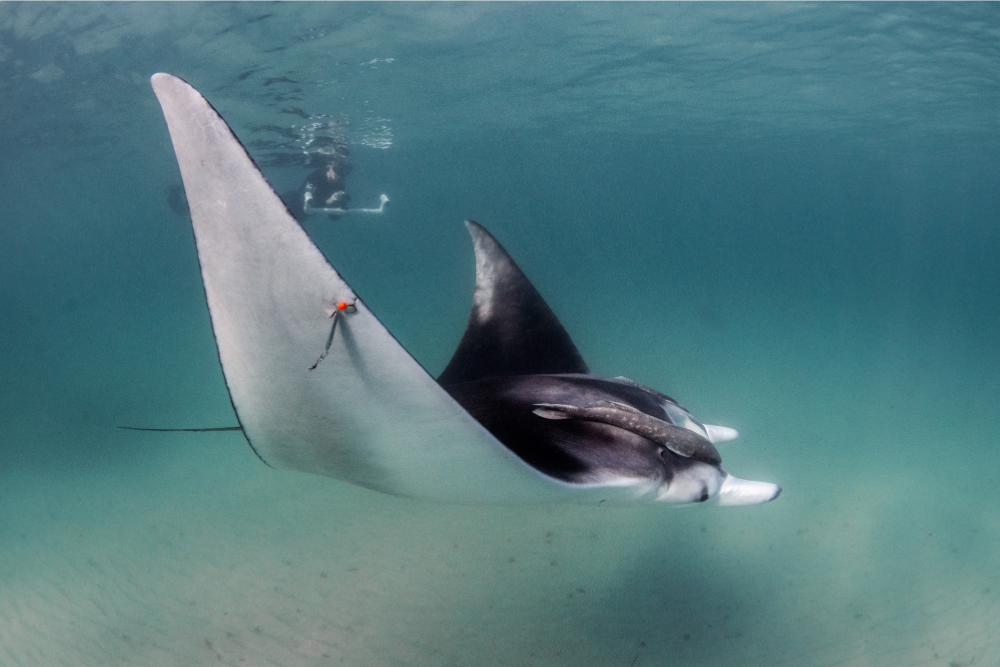
Another case of failing to look below the surface: a nursery overlooked by people moving too fast above it. The Florida Manta Project works with the community in its outreach efforts to help protect the manta rays from boaters.
“Being part of this effort, protecting baby mantas in our own backyard, feels both surreal and deeply rewarding, and it is a reminder of just how magical ocean conservation can be when science and passion come together,” Rosie said.
The research Rosie does with SeaKeepers aims to bridge the boating and yachting community with expert scientists and researchers, transforming everyday boating vessels into modern research platforms above the waves.
The Seabed 2030 project off Marco Island is just one example of their research model. By installing data loggers that collect ocean-depth data on recreational vessels, Rosie and other scientists can collect real-world depth data, helping create more accurate navigational charts, increasing boater safety.
Rosie’s work reminds us that the most extraordinary discoveries wait beneath the surface. She has built a career on diving below both stereotypes and swells, showing us that depth — in water and in people — is always rewarding.